Hirsutism is the term used for excessive hair growth in women. It refers to a male pattern of hair, i.e. in the moustache and beard areas, or occurring more thickly than usual on the limbs. There may be hairs on the chest or an extension of pubic hair on to the abdomen and thighs. What is considered normal for a woman, and what is considered hirsute, depends on cultural factors and race. Hirsutism is very common.
Hirsutism is nearly always genetic in origin. In families where hirsutism is normal, both female and male relatives may have more hair than average.
Although some women with hirsutism have increased amounts of male hormones (e.g. DHEA or testosterone), most have normal levels. The problem in these women is that the hairs are more sensitive than normal to small amounts of hormone. The hairs grow more quickly and thicker in response to it. The increased growth is usually first noted in late teenage years and tends to gradually get more severe as the woman gets older. If it occurs either with or without acne after hormone use, it is a sign of elevated DHEA or testosterone levels.
Blood, saliva or urine tests may be arranged to make sure that the hirsutism is not due to excessive male hormone levels. An ultrasound examination of the ovaries may be necessary as one common cause of hirsutism is polycystic ovaries.
Signs, symptoms & indicators of Hirsutism
Male characteristics
Enlarged clitoris
(Mild) hirsutism
Recent body hair gain
Counter Indicators
Absence of hirsutism
Unexplained missed periods
Conditions that suggest Hirsutism
Risk factors for Hirsutism
Rapid growth but short stature
Birth Control Pill / Contraceptive Issues
Some types of progestins can have androgenic effects and some women on birth control pills with an older formulation can find hair loss or hirsutism is actually promoted by the pill. Synthetically made progestins in birth control pills are not the same as naturally produced progestins like progesterone. Some synthetic progestins are structurally very similar to testosterone and/or estrogen so their androgenic or antiandrogenic effects supplement an individual’s natural hormone production levels. The response is quite variable from person to person. While some people have excess hair growth from using the pills others may develop hair loss.
New birth control pill formulations contain progestins with less androgenic activity. For example norgestimate or desogestrel are non-androgenic progestins used in modern birth control pill formulations. Those that find birth control pills promote excess hair growth or hair loss usually find switching to another formulation helps. Excess hair growth is usually reversible, but some dermatologists suggest that once androgenetic alopecia is activated it is difficult to stop or reverse even when the original trigger factor is removed.
History of adult acne
Polycystic Ovary Syndrome (PCOS)
It has been traditional to divide patients with hirsutism into those with no elevation of serum androgen levels and no other clinical features (‘idiopathic hirsutism’) and those with an identifiable endocrine imbalance (most commonly PCOS or rarely other causes). However in recent years it has become apparent that most patients with ‘idiopathic hirsutism’ have some radiological or biochemical evidence of PCOS on more detailed investigation.
The presence or absence of hirsutism depends on whether these androgens are converted peripherally by 5 alpha reductase to the more potent androgen DHT dihydrotestosterone and 3 alpha diol-G as reflected by increased levels of 3 alpha-diol-G. Therefore, it is skin 5-alpha reductase activity that largely determine the presence or absence of hirsutism.
Hirsutism suggests the following may be present
Low SHBG
Because SHBG is often low in women with hirsutism, free testosterone is elevated while the total testosterone concentration is normal. This means the free testosterone portion is responsible for increased male characteristics. Just an increase in free testosterone with no increase in total testosterone can produce significant consequences.
Estrogens increase liver manufacture of SHBG. Androgens decrease it. A lack of estrogens can effectively increase available blood androgens.
Counter Indicators
Birth Control Pill / Contraceptive Issues
Some types of progestins can have androgenic effects and some women on birth control pills with an older formulation can find hair loss or hirsutism is actually promoted by the pill. Synthetically made progestins in birth control pills are not the same as naturally produced progestins like progesterone. Some synthetic progestins are structurally very similar to testosterone and/or estrogen so their androgenic or antiandrogenic effects supplement an individual’s natural hormone production levels. The response is quite variable from person to person. While some people have excess hair growth from using the pills others may develop hair loss.
New birth control pill formulations contain progestins with less androgenic activity. For example norgestimate or desogestrel are non-androgenic progestins used in modern birth control pill formulations. Those that find birth control pills promote excess hair growth or hair loss usually find switching to another formulation helps. Excess hair growth is usually reversible, but some dermatologists suggest that once androgenetic alopecia is activated it is difficult to stop or reverse even when the original trigger factor is removed.
Recommendations for Hirsutism

Conventional Drugs / Information
If you have seen a medical doctor about hirsutism, you’re probably taking birth control pills, possibly in combination with one or more other drugs. Drugs to retard hirsutism fall into three broad categories:
1. Androgen receptor blockers: Cyproterone, flutamide (Eulexin), and spironolactone (Aldactone).
2. Androgen-suppressing agents: GnRH agonists (Lupron), estroprogestins (birth control pills), corticosteroids, and insulin-sensitizing agents (metformin/Glucophage).
3. 5 alpha-reductase inhibitors: Finasteride (Proscar), eflornithine hydrochloride (Vaniqa).
All of these drugs work to some extent. They have helped some women see measurable reductions in androgen levels and unwanted hair growth. Most have side effects. All are recommended in conjunction with birth control pills, partly to control the side effects of these medications.

Test / Monitor Hormone levels
The most important lab test to consider is testosterone and free testosterone. DHEA can be converted to testosterone and so should also be measured. If periods are irregular, FSH and prolactin should also be checked.

Topical Applications
Temporary hair removal can be achieved through depilation or epilation. Continued use of these methods works well for many women. More permanent hair removal may be achieved with methods that destroy the hair follicle (electrolysis). The success of these methods depends a great deal on the skill of the practitioner, and your skin and hair type.
Laser hair removal is newer than electrolysis. Lasers use a special light wave that is absorbed by dark hairs and damages the hair follicle. Laser therapies have not been in use long enough for hirsutism to fully determine how permanent the hair destruction is. Laser treatment is expensive also. Laser treatment should not be used by dark-skinned women and is less effective with blond, red or white hair.
Key
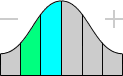
| Weak or unproven link |
| Strong or generally accepted link |
| Proven definite or direct link |
| Strongly counter-indicative |
| Very strongly or absolutely counter-indicative |
| May do some good |
| Likely to help |
| Highly recommended |
| Reasonably likely to cause problems |
Glossary
Hormones
Chemical substances secreted by a variety of body organs that are carried by the bloodstream and usually influence cells some distance from the source of production. Hormones signal certain enzymes to perform their functions and, in this way, regulate such body functions as blood sugar levels, insulin levels, the menstrual cycle, and growth. These can be prescription, over-the-counter, synthetic or natural agents. Examples include adrenal hormones such as corticosteroids and aldosterone; glucagon, growth hormone, insulin, testosterone, estrogens, progestins, progesterone, DHEA, melatonin, and thyroid hormones such as thyroxine and calcitonin.
DHEA
Dehydroepiandrosterone (DHEA) is a steroid produced by the adrenal glands and is the most abundant one found in humans. DHEA may be transformed into testosterone, estrogen or other steroids. It is found in the body as DHEA or in the sulfated form known as DHEA-S. One form is converted into the other as needed.
Testosterone
The principal male sex hormone that induces and maintains the changes that take place in males at puberty. In men, the testicles continue to produce testosterone throughout life, though there is some decline with age. A naturally occurring androgenic hormone.
Acne
A chronic skin disorder due to inflammation of hair follicles and sebaceous glands (secretion glands in the skin).
Estrogen
One of the female sex hormones produced by the ovaries.
Antiandrogenic
Substance capable of preventing full expression of the biological effects of androgenic hormones on responsive tissues, either by producing an antagonistic effect, as in the case of estrogen, or by competing for receptor sites on the cell surface.
Alopecia
Loss of hair.
Serum
The cell-free fluid of the bloodstream. It appears in a test tube after the blood clots and is often used in expressions relating to the levels of certain compounds in the blood stream.
Androgen
Any steroid hormone that increases male characteristics.
Idiopathic
Arising spontaneously or from an obscure or unknown cause.
DHT
Dihydrotestosterone - a highly active form of testosterone, which influences many aspects of manly behavior, from sex drive to aggression. The conversion from testosterone to DHT is driven by an enzyme called 5-alpha reductase, which is produced in the prostate, various adrenal glands, and the scalp.