Prolactin is one of many hormones produced by the pituitary gland. It is primarily responsible for milk production during lactation. In most women, hyperprolactinemia has a benign clinical course. Clinical presentation in women is more obvious and occurs earlier than in men.
The pituitary’s hormone production rises and falls depending on hormonal instructions from another gland, the hypothalamus. In the case of most pituitary hormones, including FSH and LH, the presence of hypothalamic hormones signals the pituitary to increase production. For prolactin, however, the signal works in reverse: An increase in the hypothalamic hormone dopamine tells the pituitary to stop releasing prolactin. In some cases, however, the dopamine cannot reach the pituitary gland by passing through the veins of the pituitary stalk. When that happens, there’s no signal to suppress the secretion of prolactin, and the pituitary continues to release prolactin.
When prolactin levels rise, the hypothalamus manufactures and releases more dopamine, once called the Prolactin Inhibiting Factor (PIF), in an effort to stop prolactin production. This increase in dopamine has other effects. In particular, it suppresses the hypothalamus’ production of the hormones that promote release of FSH and LH. This, in turn, leads to a drop in LH and FSH, causing low estrogen levels and amenorrhea. Prolactin is also reported to be synthesized and secreted by a range of other cells in the body, most prominently various immune cells, the brain and the pregnant uterus.
Some other causes for prolactin elevation, besides those listed below include nipple stimulation, chest wall lesions (herper zoster lesions, scars, pacemakers) and sexual stimulation.
Signs, symptoms & indicators of Hyperprolactinemia
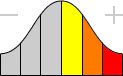
Having galactorrhea
Counter Indicators
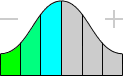
Not having galactorrhea
Conditions that suggest Hyperprolactinemia
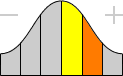
Low Testosterone Level
Prolactinoma is a condition in which a noncancerous tumor (adenoma) of the pituitary gland in your brain overproduces the hormone prolactin. The major effect of increased prolactin is a decrease in normal levels of sex hormones — estrogen in women and testosterone in men.
Low Estrogen Levels
Prolactinoma is a condition in which a noncancerous tumor (adenoma) of the pituitary gland in your brain overproduces the hormone prolactin. The major effect of increased prolactin is a decrease in normal levels of sex hormones — estrogen in women and testosterone in men.
Low Sex Drive
Prolactin is the ultimate sex drive killer. A woman’s sex drive can almost completely disappear when prolactin levels are high. Many people are aware of this for some time after giving birth and while breast-feeding, when prolactin levels are naturally high.
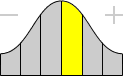
Amenorrhea
High prolactin levels can often cause amenorrhea.
Risk factors for Hyperprolactinemia
Chronic Thyroiditis
Women with thyrotoxicosis can also develop idiopathic galactorrhea.
Low Progesterone or Estrogen Dominance
Hypothalamic PIF suppression can occur as a result of excessive estrogen intake, from oral contraceptives for example. Prolactin also stimulates the secretion of progesterone, which has, as this hormone’s name indicates, an important function in gestation.
Hypothyroidism
Primary hypothyroidism with reduced circulating thyroid hormone results in an increased production of TSH by the hypothalamus, which acts in turn as a prolactin releasing factor to raise the circulating prolactin level. Restoration to a euthyroid state by the administration of thyroid hormone corrects the problem. Galactorrhea secondary to hypothyroidism is usually associated with amenorrhea. Any menstrual function abnormality is usually restored merely by correcting the underlying condition.
Chronic Fatigue / Fibromyalgia Syndrome
Prolactin levels are sometimes elevated in CFIDS patients. Levels will often come down to normal after successful CFIDS treatment.
(Very) elevated prolactin levels or borderline high prolactin levels
Counter Indicators
Normal prolactin levels
Stress
Any stimulus that causes a reduction of prolactin inhibiting factor (PIF) secretion by the hypothalamus enhances the release of pituitary prolactin. Stress can inhibit PIF production.
Increased Risk of Brain Cancer
A pituitary tumor causing compression of the pituitary stalk and the empty sella syndrome can result in an elevated prolactin level. You can be reassured that hyperprolactinemia usually is associated with a relatively benign condition (pituitary microadenoma or hyperplasia) that requires only periodic monitoring. However, it is important for your doctor to exercise vigilance and to consider the evaluation of other potential cancerous causes. Prolactin levels in patients with larger adenomas are usually higher than 100 ng/ml. There is no strong evidence that small adenomas necessarily progress to grow into large tumors.
Hyperprolactinemia suggests the following may be present
Low SHBG
Modest reductions in SHBG levels may be encountered in individuals with hyperprolactinemia.
Hypothyroidism
Primary hypothyroidism with reduced circulating thyroid hormone results in an increased production of TSH by the hypothalamus, which acts in turn as a prolactin releasing factor to raise the circulating prolactin level. Restoration to a euthyroid state by the administration of thyroid hormone corrects the problem. Galactorrhea secondary to hypothyroidism is usually associated with amenorrhea. Any menstrual function abnormality is usually restored merely by correcting the underlying condition.
Hyperprolactinemia can lead to
Low Progesterone or Estrogen Dominance
Hypothalamic PIF suppression can occur as a result of excessive estrogen intake, from oral contraceptives for example. Prolactin also stimulates the secretion of progesterone, which has, as this hormone’s name indicates, an important function in gestation.
Schizophrenia
Excessive prolactin levels has been connected with PMS and a host of extreme mental states can occur with it. In some people tranquilizers can increase prolactin levels.
Recommendations for Hyperprolactinemia

Vitex
Chaste berry extracts inhibit prolactin secretion of rat pituitary cells. [Horm Metab Res 25: p.253, 1993] A randomized placebo-controlled, double-blind, study of 52 women with elevated prolactin production, using a daily dose of one capsule (20 mg) of a chaste berry preparation, found after 3 months of therapy that prolactin release was reduced and estrogen (17 beta-estradiol) production increased. Side effects were not seen. [Arzneimittelforschung 43: p.752, 1993]
In another study, 13 women with high prolactin levels and irregular cycles were given a vitex compound. Their prolactin levels fell, and a normal menstrual cycles returned to all of the women. [Zbl Gynakologie, 1959, 18: pp.701-9]

Therapeutic Fasting
Therapuetic fasting will sometimes shrink noncancerous growths such as adenomas.
Conventional Drugs / Information
Medications such as some blood pressure medications, anti-nausea drugs or antipsychotics may cause elevated prolactin levels.Here is a page where many men and women describe how much Dostinex has helped them.
When no symptoms are present, monitoring may be all that needs to be done. When symptoms are present, the dopamine agonist, bromocriptine mesylate, is often the initial drug of choice. It lowers the prolactin level in 70-100% of patients. Agents other than bromocriptine have been used (eg, cabergoline, quinagolide). Cabergoline, in particular, probably is more effective and causes fewer adverse effects than bromocriptine. However, it is much more expensive. Cabergoline is often used in patients who cannot tolerate the adverse effects of bromocriptine or in those who do not respond to bromocriptine.
Test / Monitor Hormone levels
Prolactin levels may be ordered when a patient has symptoms of a prolactinoma such as: unexplained headaches, visual impairment, and/or galactorrhea. They may also be ordered, along with other tests, when a woman is experiencing infertility or irregular menses; or when a man has symptoms such as: a decreased sex drive, galactorrhea, or infertility. Prolactin levels are also often ordered in men as a follow-up to a low testosterone level.
When a patient has a prolactinoma, prolactin levels may be ordered to monitor the progress of the tumor and its response to treatment. They may also be used at regular intervals to monitor for prolactinoma recurrence.
Surgery
In the following conditions, surgery may be needed to deal with a prolactin secreting pituitary adenoma:
Key
| Weak or unproven link |
| Strong or generally accepted link |
| Proven definite or direct link |
| Strongly counter-indicative |
| Very strongly or absolutely counter-indicative |
| May do some good |
| Highly recommended |
Glossary
Prolactin
An anterior pituitary peptide hormone that initiates and maintains lactation.
Hormones
Chemical substances secreted by a variety of body organs that are carried by the bloodstream and usually influence cells some distance from the source of production. Hormones signal certain enzymes to perform their functions and, in this way, regulate such body functions as blood sugar levels, insulin levels, the menstrual cycle, and growth. These can be prescription, over-the-counter, synthetic or natural agents. Examples include adrenal hormones such as corticosteroids and aldosterone; glucagon, growth hormone, insulin, testosterone, estrogens, progestins, progesterone, DHEA, melatonin, and thyroid hormones such as thyroxine and calcitonin.
Pituitary
The pituitary gland is small and bean-shaped, located below the brain in the skull base very near the hypothalamus. Weighing less than one gram, the pituitary gland is often called the "master gland" since it controls the secretion of hormones by other endocrine glands.
Lactation
Production of milk; period after giving birth during which milk is secreted in the breasts.
Benign
Literally: innocent; not malignant. Often used to refer to cells that are not cancerous.
Hypothalamus
An important supervisory center in the brain regulating many body functions. Despite its importance in maintaining homeostasis, the hypothalamus in humans accounts for only 1/300 of total brain weight, and is about the size of an almond.
Dopamine
A neurohormone; precursor to norepinephrine which acts as a stimulant to the nervous system.
Estrogen
One of the female sex hormones produced by the ovaries.
Adenoma
An ordinarily benign growth of epithelial tissue in which the tumor cells form glands or gland-like structures that tend to exhibit glandular function.
Testosterone
The principal male sex hormone that induces and maintains the changes that take place in males at puberty. In men, the testicles continue to produce testosterone throughout life, though there is some decline with age. A naturally occurring androgenic hormone.
Thyrotoxicosis
Also known as Graves' disease, is a disorder of excess thyroid hormone production. It is usually linked to an enlarged thyroid gland and bulging eyes (exophthalmos).
Idiopathic
Arising spontaneously or from an obscure or unknown cause.
Galactorrhea
Galactorrhea is inappropriate lactation in the woman who is not pregnant or has not recently given birth. It can be unilateral or bilateral.
Hypothyroidism
Diminished production of thyroid hormone, leading to low metabolic rate, tendency to gain weight, and sleepiness.
Thyroid
Thyroid Gland: An organ with many veins. It is at the front of the neck. It is essential to normal body growth in infancy and childhood. It releases thyroid hormones - iodine-containing compounds that increase the rate of metabolism, affect body temperature, regulate protein, fat, and carbohydrate catabolism in all cells. They keep up growth hormone release, skeletal maturation, and heart rate, force, and output. They promote central nervous system growth, stimulate the making of many enzymes, and are necessary for muscle tone and vigor.
ng
Nanogram: 0.000000001 or a billionth of a gram.
Premenstrual Syndrome
PMS consists of various physical and/or emotional symptoms that occur in the second half of the menstrual cycle, after ovulation. The symptoms begin about midcycle, are generally the most intense during the last seven days before menstruation and include: acne; backache; bloating; fatigue; headache; sore breasts; changes in sexual desire; depression; difficulty concentrating; difficulty handling stress; irritability; tearfulness.