Colon polyps come in two forms, namely hyperplastic and adenomatous. Hyperplastic polyps are benign and do not indicate any future problems with colon cancer, whereas adenomatous polyps are precancerous and, if left in place, can eventually develop into colon cancer. These are the types of polyps that are sought during a flexible sigmoidoscopy or colonoscopy. Early removal of the polyp results in a significant decrease in the chances that a patient will develop colon cancer. People with a prior colon polyp have as much as a 50% chance of developing more colon polyps within three years of their diagnosis.
The cause of most colon polyps is unknown. A small number of people with inherited polyp syndromes are at much higher risk than the average person of having polyps and developing colon cancer.
A colon polyp usually is removed if it is adenomatous and larger than 1 cm (0.39 in.). Smaller polyps also are removed, although it is unclear whether polyps smaller than 5 mm (0.2 in.) indicate a risk of developing cancer. Although many people will develop colon polyps in their lifetime, most polyps will not develop into cancer. It is estimated that during one year’s time, 1 out of every 400 adenomatous polyps will become cancerous.
Risk factors for Colon Polyps
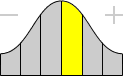
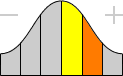
Calcium Requirement
A low-calcium diet has been associated with an increased risk of developing colon polyps.
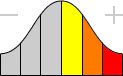
(History of) colon polyps
Counter Indicators
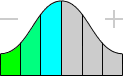
No history of colon polyps
Colon Polyps suggests the following may be present
Recommendations for Colon Polyps

Soy Isoflavones (genistein, daidzein)
Men who eat one or more servings of soy per week reduce the risk of developing colon polyps by half. [ Am J Epidemiol 1996;44(11): pp.1015-25]
Vegetarian/Vegan Diet
There have been other cases which suggest that colon polyps may disappear with improved diet and health, and the fecal material becomes less toxic. Polyps have been shown to regress and disappear when the fecal material is diverted away from the colon by a surgical colostomy. This is because toxic irritation of the colonic tissues is caused by diets or poor digestion that can contribute to toxicity in the colon. Some individuals have reported many colon polyps disappearing within years after making changes to improve their diet. Even though all the details have not been worked out, the evidence indicates that meat, fat, processed foods, and a lack of fruits, vegetables and dietary fiber contribute to this toxic state.

NSAIDs
Aspirin and other non-steroidal anti-inflammatory drugs (NSAIDs) could act to prevent the development of polyps in the colon, which are precursors to most colorectal cancers. In one study, patients who took aspirin or other NSAIDs more than 15 times per month at some time during the five years prior to the study were defined as “regular users”; patients who never took medication more than 15 times per month were defined as “non-users”. After accounting for factors such as diet, lifestyle and family medical history, Dr. Sandler found that regular users of aspirin and other NSAIDs were only half as likely to harbor colon polyps as non-users.
“Our study supports the idea that some mechanism in aspirin and other NSAIDs has a protective effect when it comes to colon cancer,” said Dr. Sandler. “More significantly, our results indicate that this protective effect occurs early in the process of cancer development, helping us to pinpoint where in the cancer development sequence these drugs might work best.” [ Gastroenterology, March 1998]
In addition, colon polyps have dissappeared after treatment with NSAIDS. It was found that nearly 80% of patients with sporadic colon polyps, the type that can develop into common colon cancer, had their polyps disappear or shrink after taking sulindac, a nonsteroidal anti-inflammatory drug (NSAID), for one year.
Vitamin Folic Acid
Supplementation with folic acid (2000mcg per day) reduced colonic mucosal cell proliferation in a placebo-controlled study of 11 patients with recurrent adenomatous colon polyps. Supplementation continued for a period of 3 months in this trial.[Gut 2002;51(2): pp.195-199]
Key
| Weak or unproven link |
| Strong or generally accepted link |
| Proven definite or direct link |
| Very strongly or absolutely counter-indicative |
| Likely to help |
| May have adverse consequences |
Glossary
Colon
The part of the large intestine that extends to the rectum. The colon takes the contents of the small intestine, moving them to the rectum by contracting.
Polyp
A usually nonmalignant growth or tumor protruding from the mucous lining of an organ such as the nose, bladder or intestine, often causing obstruction.
Benign
Literally: innocent; not malignant. Often used to refer to cells that are not cancerous.
Cancer
Refers to the various types of malignant neoplasms that contain cells growing out of control and invading adjacent tissues, which may metastasize to distant tissues.
Millimeter
(mm): A metric unit of length equaling one thousandth of a meter, or one tenth of a centimeter. There are 25.4 millimeters in one inch.