Also known as arachnodactyly, Marfan’s syndrome is a rare hereditary disorder that causes connective tissue to be weaker than normal. Affected individuals are most often unusually tall and slender, with particularly long arms, legs and fingers in comparison to the rest of their body. This condition is thought to affect approximately one person in 10,000 in the US.
While there is no cure, there are effective treatments, and most people with the disorder live full active lives.
Conventional treatment recommendations include such things as:
1. Ocular and cardiovascular surveillance of all people with Marfan syndrome every 6-12 months
2. Activity restrictions:
NO Isometric exercise (no weight lifting)
No sudden acceleration/deceleration activities (roller coasters, bungy jumping, drag racing)
No unpressurized flights; No SCUBA diving
No competitive sports
No contact sports
3. Medications to minimize the rate of aortic root dilatation (beta blocking agents, calcium channel blocking agents)
4. Adherence to prophylactic antibiotic recommendations as indicated
Close surveillance of the Marfan aorta is recommended during pregnancy. If aortic enlargement is detected in the early stages of pregnancy, aortic imaging studies are recommended every 1 to 3 months until delivery.
Signs, symptoms & indicators of Marfan's Syndrome
Double-jointedness
Having weak arches
Conditions that suggest Marfan's Syndrome
Having retinal detachments or having a retinal detachment
Being nearsighted
Scoliosis
Having funnel chest or being pigeon breasted
Risk factors for Marfan's Syndrome
Having long arms and legs
Slender fingers / toes
History of scoliosis
Counter Indicators
Having short arms and legs
Marfan's Syndrome can lead to
Recommendations for Marfan's Syndrome

Aerobic Exercise
Because the Marfan syndrome appears in many forms, recommendations about exercise vary widely. People with dilation of the aorta may be asked to avoid the usual team sports. Isometric exercises (such as weight lifting or rowing) and contact sports in which a blow to the chest could occur (such as football or hockey) also may be off-limits. Many people with the Marfan syndrome can participate in modified physical and recreational activities without being overly concerned.


Surgery
Surgical resection of the aorta is recommended when:
1. Aortic aneurysm size on echocardiogram, MRI or CAT scan exceeds 4.5 to 5 cm in diameter
2. When the ascending aortic diameter is twice the diameter of the descending thoracic aorta
3. In children, when the ascending aortic diameter is twice the expected diameter for person this age and size.
Mitral valve repair or replacement may be necessary.
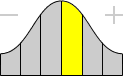
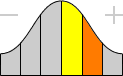
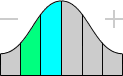
Key
| Weak or unproven link |
| Strong or generally accepted link |
| Strongly counter-indicative |
| May do some good |
| May have adverse consequences |
| Reasonably likely to cause problems |
Glossary
Cardiovascular
Pertaining to the heart and blood vessels.
Dilatation
Normal increase in the size of a body opening, blood vessel, or tube.
Calcium
The body's most abundant mineral. Its primary function is to help build and maintain bones and teeth. Calcium is also important to heart health, nerves, muscles and skin. Calcium helps control blood acid-alkaline balance, plays a role in cell division, muscle growth and iron utilization, activates certain enzymes, and helps transport nutrients through cell membranes. Calcium also forms a cellular cement called ground substance that helps hold cells and tissues together.