Night blindness, also called nyctalopia, is the inability or reduced ability to see in dim light or darkness. It also refers to the condition in which the time it takes for the eyes to adapt to darkness is prolonged.
Night blindness is a symptom of several different diseases or conditions, sometimes caused by unlikely diseases or medications. All of the possible causes of night blindness are associated with the way in which the eye receives light rays. Light travels through the cornea and lens and lands on the retina at the back of the eye. The retina is composed of photoreceptors – specialized nerve cells which convert light rays into electrical signals and transmit them to the brain, which then creates an image.
There are two types of photoreceptors, rods and cones. There are some 3 million cones and 100 million rods in each eye. Rods see only black and white, but cones see colors. Rods also enable the eyes to detect motion and provide peripheral vision. Rods are responsible for vision in dim light and cones are responsible for vision in bright light. The rods are spread throughout the retina, but the cones are only in the center of the retina.
Vision in dim light or darkness is blurry because of the connections between the photoreceptors and the nerve cells which are linked to the brain. Each rod must share this connection to the brain with several other rods so the brain does not know exactly which rod produced the signal. Vision in bright light is sharp because each cone has its own connection to the brain so the brain can determine exactly where on the retina the signal originated.
Another feature of rods is that they must adapt to darkness. This is best exemplified by walking into a dark movie theater. At first, one can see very little. With time, vision improves and one is able to discern objects. Ultimately, one can see moderately well. This dark adaptation process occurs because of the chemical nature of rhodopsin. Rhodopsin is decomposed in bright light, making the rods nonfunctional. In darkness, rhodopsin is regenerated faster than it can be decomposed. Dark adaptation takes about 15-30 minutes and, when complete, increases light sensitivity by about 100,000 times.
Night blindness can be diagnosed and treated by an ophthalmologist, a physician who specializes in eye disorders. Opticians can only dispense eye glasses but optometrists may be able to diagnose and treat vision problems.
Diagnosis begins with a detailed medical history regarding the night blindness. Questions include: severity of night blindness, when night blindness began and whether it occurred gradually or suddenly. An eye examination is performed and a slit lamp examination – in which a narrow beam of intense light is used to examine the internal components of the eye – may also be performed. Additional testing may be performed based upon the results of these standard tests.
Changes in vision should never be taken lightly. Because night blindness can be a symptom of a serious disease, an ophthalmologist should be consulted before a person embarks on self treatment. Persons who experience night blindness should not drive during the evening or at night.
Risk factors for Night Blindness
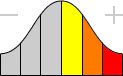
Cataracts / Risk
Cataracts, characterized by cloudiness of the lens, can cause night blindness.
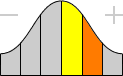
Zinc Requirement
Zinc is required in order to transport vitamin A from the liver to the retina and thus zinc supplementation, especially in those who are deficient, should help improve night vision.
Vitamin A Requirement
Night blindness is commonly caused by a deficiency in vitamin A. It is considered one of the first indicators of vitamin A deficiency.
Retinitis Pigmentosa
Retinitis pigmentosa results in visual rods being destroyed early in the course of disease, resulting in night blindness. Night blindness in children may be an early indicator of retinitis pigmentosa.
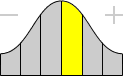
Liver Detoxification / Support Requirement
Reduced night vision can be linked to a variety of conditions caused by impaired liver function which in turn reduces vitamin A metabolism.
Night Blindness suggests the following may be present
Retinitis Pigmentosa
Retinitis pigmentosa results in visual rods being destroyed early in the course of disease, resulting in night blindness. Night blindness in children may be an early indicator of retinitis pigmentosa.
Recommendations for Night Blindness

Grape Seed Extract / Resveratrol
One interesting 6-week controlled (but not blinded) study evaluated the ability of grape seed OPCs to improve night vision in normal subjects. In this trial of 100 healthy volunteers, those who received 200 mg per day of OPCs showed improvements in night vision and glare recovery as compared to untreated subjects. [(English abstract) Bull Soc Ophtamol Fr. 1988;88: pp.173-174, 177-179]

Vitamin A
When you enter a dark room, the vitamin A changes shape and helps your eyes realize that you’ve entered a dark room.
Despite this heavy demand for vitamin A, it still is pretty hard to develop a deficiency of this nutrient in the United States, where the foods in which it is contained are plentiful. Common staples such as milk and margarine are fortified with vitamin A, and orange and yellow foods such as sweet potatoes and carrots are rich sources of beta-carotene. (Beta-carotene is a precursor of vitamin A and converts to vitamin A in the body.) We need to depend on outside sources for vitamin A because the body can’t make its own.
A healthy liver is usually able to store up to a year’s supply of vitamin A. You would have to be chronically deprived of vitamin A food sources for quite a while for it to affect your sight, as is the case with millions of children in developing nations.
“Night blindness resulting from vitamin A deficiency is very, very, very, very rare in individuals who live in America,” says Dr. Reichel. And even if it does develop, it can frequently be reversed within an hour by injections of vitamin A.
Most people with night blindness have eyes that mobilize vitamin A so slowly that it takes a while to adjust to the dark, says Dr. Reichel. People notice it most often when they’re going into theaters or driving at night.
Key
| Weak or unproven link |
| Strong or generally accepted link |
| Proven definite or direct link |
| May do some good |
| Likely to help |
Glossary
Cornea
Transparent structure forming the anterior part of the eye.
Retina
A 10-layered, frail nervous tissue membrane of the eye, parallel with the optic nerve. It receives images of outer objects and carries sight signals through the optic nerve to the brain.
Cataract
A steadily worsening disease of the eye in which the lens becomes cloudy as a result of the precipitation of proteins. Most cataracts are caused by the functions of the body breaking down. Eye trauma, such as from a puncture wound, may also result in cataracts.
Zinc
An essential trace mineral. The functions of zinc are enzymatic. There are over 70 metalloenzymes known to require zinc for their functions. The main biochemicals in which zinc has been found to be necessary include: enzymes and enzymatic function, protein synthesis and carbohydrate metabolism. Zinc is a constituent of insulin and male reproductive fluid. Zinc is necessary for the proper metabolism of alcohol, to get rid of the lactic acid that builds up in working muscles and to transfer it to the lungs. Zinc is involved in the health of the immune system, assists vitamin A utilization and is involved in the formation of bone and teeth.
Vitamin A
A fat-soluble vitamin essential to one's health. Plays an important part in the growth and repair of body tissue, protects epithelial tissue, helps maintain the skin and is necessary for night vision. It is also necessary for normal growth and formation of bones and teeth. For Vitamin A only, 1mg translates to 833 IU.
Metabolism
The chemical processes of living cells in which energy is produced in order to replace and repair tissues and maintain a healthy body. Responsible for the production of energy, biosynthesis of important substances, and degradation of various compounds.