Vulvodynia is a medical term that means ‘painful vulva’. The term can cover a wide variety of vulvar pain syndromes including various infections and skin disorders.
Some cases of vulvodynia may be due to compression or disease of the pudendal nerve, one of the main nerves that relays sensation to and from the genitals. The term is also used to refer to vestibulitis or Vulvar Vestibulitis Syndrome (VVS), which is an inflammation of the vestibule, or opening into the vagina and the tissues immediately around the vaginal opening. This condition is sometimes also called ‘vestibular adenitis’. In a few people vulvodynia clears up on its own after 6-12 months.
In mild cases, a burning or stinging sensation is noted during intercourse or when tampons are inserted. Upon touching the area with a cotton swab, pain is felt when the hymen and inner vaginal lips are touched. There also may be redness and swelling. In severe cases, the pain can be agonizing and much of the vulvar can be reddened, swollen and very inflamed. Often the edges of the inner vaginal lips are very sensitive and the pain so severe that it makes walking difficult. There may be a constant itching or stinging sensation in the grooves between the large and small vaginal lips. Wearing underwear may be very uncomfortable as the slightest touch to the area may result in excruciating pain.
Other signs include pain or discomfort upon touching the pubic hair, over the vulvar skin or in certain spots. These sensations may extend to the rectal area or skin of the perineum. The clitoris can become involved, becoming painful or hypersensitive and there may be shooting pains from the clitoris up the abdomen. Sexual intercourse and urination may be very painful.
Some women need to avoid underwear that irritates the area or avoid using underwear altogether. If you must wear pantyhose or stockings for work, wear brands with a cotton crotch over the all-cotton underwear and slit the pantyhose crotch to relieve binding, or use old fashioned garter belts and stockings. Additionally, during your menstrual period, if you cannot tolerate a tampon string, you may cut off the string prior to insertion. If menstrual pads are too painful, you may use rolls of absorbent cotton.
Another condition, pudendal neuralgia, is a little known disease that affects one of the most sensitive areas of the body. Due to the location of the discomfort combined with inadequate knowledge, some physicians make reference to the pain as psychological. But nothing could be further from the truth. Unfortunately, discussing the condition with gynecologists, urologists and neurologists often proves fruitless since most know nothing about the condition and therefore cannot diagnose it.
Pudendal neuralgia is a chronic and painful condition that occurs in both men and women, although studies reveal that about two-thirds of those with the disease are women. The primary symptom is pain in the genitals or the anal-rectal area and the immense discomfort is usually worse when sitting. The pain tends to move around in the pelvic area and can occur on one or both sides of the body. Sufferers describe the pain as burning, knife-like or aching, stabbing, pinching, twisting and even numbness.
These symptoms are usually accompanied by urinary problems, bowel problems and sexual dysfunction. Because the pudendal nerve is responsible for sexual pleasure and is one of the primary nerves related to orgasm, sexual activity is extremely painful, if not impossible for many pudendalites.
Signs, symptoms & indicators of Vulvodynia / Vestibulitis
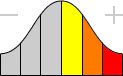
(Severe) vulvar pain
Symptoms of vulvodynia or vestibulitis can range in severity from mild to severe. Burning, itching and pain are experienced in the skin of the vaginal entryway and sometimes the labia or clitoris.
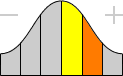
Vaginal itching
Conditions that suggest Vulvodynia / Vestibulitis

Urethritis / Urethral Syndrome
Vestibulitis may sometimes be part of bladder and/or urethral inflammation as seen in the interstitial cystitis or urethral syndrome. The lining of both vagina and bladder arise from the same tissue during fetal development; thus when one becomes inflamed, the inflammation may spread to the adjoined areas.
Counter Indicators

Risk factors for Vulvodynia / Vestibulitis
Chronic Fatigue / Fibromyalgia Syndrome
Dr. St. Amand, MD, specializing in fibromyalgia and author of What Your Doctor May Not Tell You About Fibromyalgia believes that all women with chronic vulvodynia have a form of fibromyalgia. He discovered that at least 11% of his female patients with fibromyalgia also have vulvodynia (painful genitals). The guaifenesin therapy for chronic fatigue enhances oxalate crystal excretion which has been shown to be beneficial in vulvodynia also.
HPV (Human Papilloma Virus)
Whether there is an association between vestibulitis and HPV infection is still being debated.
Yeast / Candida
Cyclic vulvovaginitis is probably the most common cause of vulvodynia and is believed to be caused by a hypersensitivity reaction to Candida. While vaginal smears and cultures are not consistently positive, microbiologic proof should be sought by obtaining candidal or fungal cultures during a symptom-free phase. The diagnosis of cyclic vulvitis is made based on the patient’s report of cyclic symptomatic flare-ups (or, conversely, symptom-free days) and by the patient’s report of symptomatic improvement after the administration of long-term topical or systemic anticandidal therapy. [Autoimmunity as a factor in recurrent vaginal candidiasis and the minor vestibular gland syndrome. J Reprod Med 1989;34: pp.264-6]
STD Herpes II
Some women seem to develop vulvodynia in response to infection with the herpes virus. [Vulvodynia: A Perplexing Disorder; Questions and Answers With Stanley Marinoff, M.D. NVA News, Vol. I, Issue 1; Winter, 1995]
Recommendations for Vulvodynia / Vestibulitis

Oxalate Avoidance
Reducing the amount of oxalate in your diet may be helpful. Things to avoid include tea, spinach, beer, berry juices, baked beans in tomato sauce, peanuts, peanut butter creams, pecans, soybean curd, concord grapes. In addition, do not take more than 250mg of Vitamin C per day as it may contribute to oxalate formation. Restrict or limit milk or dairy products to reduce the amount of calcium oxalate in the body. Calcium citrate may prescribed to neutralize high blood or urine levels of oxalate.
Conventional Drugs / Information
If intercourse is painful, you can apply xylocaine jelly to numb the sore areas.

Antibiotics
Vulvar pain that is due to infection e.g. ureaplasma, candida or strep will respond to the appropriate treatment.
Chemical Avoidance
Carefully avoid all potential irritants in your underwear, such as laundry soaps and bleaches. You may use a mild non-perfumed soap such as Castile soap and run twice through the rinse cycle. Perfumed or even plain soaps may aggravate the irritation. Natural glycerin soap may be helpful as it has no residual drying effects. A hand-held shower massager is preferable to an overhead nozzle as it makes it much easier to wash away any soap residue that remains after washing. Washing the vulvar area with distilled water instead of tap water may help avoid irritation from chlorine. Another way to help painful urination is to pour a cup of water on the area while urinating: this dilutes the urine and helps to wash away any irritating residue.
Estrogen Replacement
Topical estrogen creams may provide relief. Estrogen thickens or toughens the skin and increases blood supply. It may help you even if you have not reached menopause or do not have estrogen deficiency. If you find vaginal creams painful (possibly from the additives such as alcohol or parabens), your physician may mix 5-10% solution in a petroleum gel base or mineral oil instead of using the standard base.

Ozone / Oxidative Therapy
Trichomona, Candida albicans and Gardenela Vaginali are present nearly in 97% of the vulvovaginitis. Ozonized oil was applied, considering its estimated capability in eliminating fungus and micro-organisms. They studied 60 patients dividing them in 3 different groups: 30 were treated putting drops of ozonized oil, 20 patients were treated with conventional methods and 10 patients were treated with placebo oil without ozonization. The results were proven by colposcopia. All the patients treated with ozonized oil recovered in 5-7 days. In the group treated with habitual methods, 20% of patients recovered in 10-16 days. In the placebo group symptoms got worse. In the group treated with ozonized oil the pain was eliminated in 24 hours and itch was eliminated in 48-72 hours. [T. de las Cagigas, V.Bastard, S.Menendez, M.Gomez, L.Eng Consultorio del Medico de la Famiglia del Policlinico “Luis Pasteur”, Centro de Investigaciones Cientificas]
12 patients with vulvovaginitis were studied who could not tolerate carbohydrates. These patients had suffered from vulvovaginitis due to Candida Albicans for years and did several therapies without results, even if they had a normal blood sugar control. They were prescribed vaginal washings with ozonized oil for 5 days. This cycle had to be repeated twice after an interval of two days from one another. The results were the recovery from vulvovaginitis and the cessation of itching. Abundant secretion normalized after the therapy. Only one patient had problems after 18 months, but without having a new infection of Candida Albicans. [G.Morris, M.Gomez, S.Menèndez, M.Correa, M.Pèrez. L.A. Fernandez Clinica Central “Cira Garcia”, Centro Nacional de Investigaciones Cientificas]
Hot Applications
Soothing relief may be obtained by applying warm soaked tea bags to the area. This can be done by placing the tea bags on menstrual pads to hold them in place or you can take a sitz bath in which tea bags have been soaked.
Physical Supports
To relieve pressure on the vulvar area when sitting you may use a pressure relief cushion.
Visualization / Relaxation Techniques
Biofeedback and pelvic muscle exercises involving relaxation and muscle strengthening may be helpful.
Prolotherapy
The iliolumbar ligament may be weakened and referring pain to the vulvar area. Prolotherapy can strengthen that ligament.
Surgery
Surgical treatment may include removal of painful areas such as the vulvar (bartholin’s) glands, excision of the pudendal nerve and/or laser therapy to destroy underlying vulvar blood vessels.
Key
| Weak or unproven link |
| Strong or generally accepted link |
| Proven definite or direct link |
| Strongly counter-indicative |
| May do some good |
| Likely to help |
| Highly recommended |
Glossary
Perineum
The area between the anus and the posterior part of the external genitalia.
Neuralgia
Pain of severe throbbing or stabbing nature along a nerve.
Chronic
Usually Chronic illness: Illness extending over a long period of time.
Interstitial Cystitis
A chronic bladder problem involving a bladder wall that is inflamed and irritated. Symptoms include an urgent need to urinate, both daytime and nighttime; pressure, pain and tenderness around the bladder, pelvis and perineum (the area between the anus and vagina or the anus and scrotum) which may increase as the bladder fills and decrease as it empties during urination; a bladder that won't hold as much urine as it did before; pain during sexual intercourse; in men, discomfort or pain in the penis or scrotum. In many women, the symptoms get worse before their menstrual period. Stress may also make the symptoms worse, but it does not cause them.
Fibromyalgia
(FMS): Originally named fibrositis, it is a mysteriously debilitating syndrome that attacks women more often than men. It is not physically damaging to the body in any way, but is characterized by the constant presence of widespread pain that often moves about the body. Fibromyalgia can be so severe that it is often incapacitating.
Chronic Fatigue Syndrome
CFS (Chronic Fatigue Syndrome) is a disorder of unknown cause that lasts for prolonged periods and causes extreme and debilitating exhaustion as well as a wide range of other symptoms such as fever, headache, muscle ache and joint pain, often resembling flu and other viral infections. Also known as Chronic Fatigue and Immune Dysfunction Syndrome (CFIDS), Chronic Epstein-Barr Virus (CEBV), Myalgic Encephalomyelitis (ME), "Yuppy Flu" and other names, it is frequently misdiagnosed as hypochondria, psychosomatic illness, or depression, because routine medical tests do not detect any problems.
Candidiasis
Infection of the skin or mucous membrane with any species of candida, usually Candida albicans. The infection is usually localized to the skin, nails, mouth, vagina, bronchi, or lungs, but may invade the bloodstream. It is a common inhabitant of the GI tract, only becoming a problem when it multiplies excessively and invades local tissues. Growth is encouraged by a weakened immune system, as in AIDS, or with the prolonged administration of antibiotics. Vaginal symptoms include itching in the genital area, pain when urinating, and a thick odorless vaginal discharge.
Topical
Most commonly 'topical application': Administration to the skin.
Virus
Any of a vast group of minute structures composed of a protein coat and a core of DNA and/or RNA that reproduces in the cells of the infected host. Capable of infecting all animals and plants, causing devastating disease in immunocompromised individuals. Viruses are not affected by antibiotics, and are completely dependent upon the cells of the infected host for the ability to reproduce.