People who experience a jump in blood pressure when they consume salt are at increased risk of dying from heart disease, according to a study published in the Feb. 16, 2001 supplemental issue of Hypertension, a journal of the American Heart Association.
The study’s findings highlight the potential effects of dietary salt on long-term health. While not all hypertensive people are salt-sensitive and not all salt-sensitive people are hypertensive, salt-sensitive individuals with normal to high blood pressure are at increased risk of death when they consume lots of salt.
Researchers analyzed medical data from about 600 people aged 18 to 80. The initial analysis showed that nearly 40% of the group had high blood pressure and 50% were salt sensitive. About 21% died of cardiovascular or other causes during the 25-year study. Individuals who were deemed salt sensitive and initially had normal blood pressure were just as likely to have died as those with high blood pressure.
The researchers estimate that 26% of Americans with normal blood pressure and about 58% of those with high blood pressure may be salt sensitive. Unfortunately, there is no easy way to test for salt sensitivity. One method used involves administering a saline solution followed by a diuretic and noting if blood pressure drops more than 10mm.
On average, only 10% of dietary sodium comes from salt added to food at the table. Therefore, beyond eliminating salt from the table, the researchers recommend reducing preserved and processed food consumption and avoiding the addition of excessive salt to food being prepared at home. They advise reducing daily salt intake to 2,400mg (slightly more than 1 tsp). People should check food labels and watch out for high sodium items, including such processed foods as luncheon meats, prepared cheeses, canned vegetables, and baked products.
Conditions that suggest Salt Sensitivity
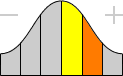
Increased Risk of Hypertension
Researchers estimate that 26% of Americans with normal blood pressure and about 58% of those with high blood pressure may be salt sensitive. [Feb. 16, 2001 supplemental issue of Hypertension]
Increased Risk of Coronary Disease / Heart Attack
People who experience a jump in blood pressure when they consume salt are at increased risk of dying from heart disease. Even salt-sensitive individuals with normal blood pressure are at risk, as blood pressure eventually rises. [Hypertension (supp), Feb. 16, 2001] Hypertension and salt sensitivity are independent risk factors for cardiovascular disease.
Salt Sensitivity can lead to
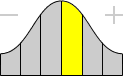
Increased Risk of Hypertension
Researchers estimate that 26% of Americans with normal blood pressure and about 58% of those with high blood pressure may be salt sensitive. [Feb. 16, 2001 supplemental issue of Hypertension]
Recommendations for Salt Sensitivity


Key
| Weak or unproven link |
| Strong or generally accepted link |
| Highly recommended |
| Reasonably likely to cause problems |
Glossary
Hypertension
High blood pressure. Hypertension increases the risk of heart attack, stroke, and kidney failure because it adds to the workload of the heart, causing it to enlarge and, over time, to weaken; in addition, it may damage the walls of the arteries.
Cardiovascular
Pertaining to the heart and blood vessels.
Diuretic
An agent increasing urine flow, causing the kidneys to excrete more than the usual amount of sodium, potassium and water.
Millimeter
(mm): A metric unit of length equaling one thousandth of a meter, or one tenth of a centimeter. There are 25.4 millimeters in one inch.
Sodium
An essential mineral that our bodies regulate and conserve. Excess sodium retention increases the fluid volume (edema) and low sodium leads to less fluid and relative dehydration. The adult body averages a total content of over 100 grams of sodium, of which a surprising one-third is in bone. A small amount of sodium does get into cell interiors, but this represents only about ten percent of the body content. The remaining 57 percent or so of the body sodium content is in the fluid immediately surrounding the cells, where it is the major cation (positive ion). The role of sodium in the extracellular fluid is maintaining osmotic equilibrium (the proper difference in ions dissolved in the fluids inside and outside the cell) and extracellular fluid volume. Sodium is also involved in nerve impulse transmission, muscle tone and nutrient transport. All of these functions are interrelated with potassium.
Milligram
(mg): 1/1,000 of a gram by weight.