HDL and LDL are two different kinds of cholesterol that are measured as an index of a patient’s risk for cardiovascular disease. HDL stands for high-density lipoprotein and LDL stands for low-density lipoprotein. Total cholesterol measures the combination of HDL, LDL and VLDL.
Unlike men, a high LDL (“bad cholesterol”) level is not as strong a predictor of future trouble for women, although there is still considerable debate on this. Some experts believe LDL is not to be worried about for most women, except for particular sub-groups of women who are affected. As one might expect, until the situation is clarified, the importance of LDL for women is in question.
Elevated LDL cholesterol may turn out to be less of a risk factor than currently thought. There is an E-Book available called The Great Cholesterol Lie. In it, Dr. Dwight Lundell, MD, a cardiovascular and thoracic surgeon makes it clear what causes heart disease and points out that it is not cholesterol! Click Here! to read about this book.
Low HDL levels in men and women should be raised, while LDL levels, at least in men, may need to be lowered. Further, more detailed lab testing that breaks down LDL into subfractions, is advised for anyone with a high cardiovascular disease risk.
Conditions that suggest Elevated LDL/HDL Ratio
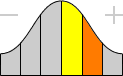
Atherosclerosis
LDL is the cholesterol type most commonly thought of as a strong risk factor for atherosclerosis and heart disease. Oxidized LDL and the fraction called Lp-a produce a greater risk. Since HDL cholesterol reduces the risk, low HDL levels are not desirable.
Minimal sitting or doesn't sit
Please see the link between sitting and Diabetes.
Gallbladder Disease
Gallstone formation does not correlate with blood cholesterol levels, but persons with low HDL cholesterol (the so-called good cholesterol) levels or high triglyceride levels are at increased risk.
Risk factors for Elevated LDL/HDL Ratio
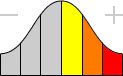
(Very) low HDL level
(Borderline) high LDL
Counter Indicators
Optimal (?) LDL or normal LDL
Excellent/average HDL level
Sitting way/sitting too much or average sitting
Please see the link between sitting and Diabetes.
Manganese Requirement
Manganese can help lower high triglyceride and cholesterol levels, with a particular effect on stabilizing LDL and decreasing its atherogenic potential.
Elevated LDL/HDL Ratio suggests the following may be present
Manganese Requirement
Manganese can help lower high triglyceride and cholesterol levels, with a particular effect on stabilizing LDL and decreasing its atherogenic potential.
Recommendations for Elevated LDL/HDL Ratio

Grape Seed Extract / Resveratrol
See the link between Elevated Total Cholesterol and Grape Seed Extract.

Hydrogenated Fats / Trans Fatty Acids Avoidance
Trans fat has also been shown in studies to raise the levels of LDL or “bad cholesterol” and may also increase total serum cholesterol. In one Dutch study, blood levels of HDL or “good cholesterol” were lowered by 20% compared to when the same subjects ate a diet rich in saturated fats. [http://www.medicinalfoodnews.com/vol05/issue6/transfat.htm]
Mayo Clinic reports “Unlike other fats, trans fat – also called trans-fatty acids – both raises your “bad” (LDL) cholesterol and lowers your “good” (HDL) cholesterol.
And, dietary trans-fats cause hardening of the arteries. A mouse study suggests that high levels of trans-fats cause atherosclerosis by reducing the responsiveness of transforming growth factor (TGF)-beta. This protein controls growth and differentiation in cells. The findings of this study reinforce research that has linked the predominantly man-made fat with a range of health problems.
“Trans-fats are attractive for the food industry due to their extended shelf life and flavor stability, and have displaced natural solid fats and liquid oils in many areas of food processing.” ” . . . Trans-fatty acids raise serum levels of LDL-cholesterol, reduce levels of HDL-cholesterol, can promote inflammation can cause endothelial dysfunction, and influence other risk factors for cardiovascular diseases (CVD) . . .” [The Journal of Nutritional Biochemistry October 30, 2010]

Weight Loss
Even a modest weight loss of 10 pounds (4.5 Kg) is associated with a 16% decrease in total cholesterol, a 12% decrease in LDL cholesterol and an 18% increase in HDL cholesterol.
Nut and Seed Consumption
“Solid data has shown that eating one to three daily portions of almonds (28 to 84 grams) can help lower LDL cholesterol levels,” said study co-author Rick Mattes, Ph.D., R.D. from Purdue University in West Lafayette, USA. “But many health care providers have been hesitant to recommend almonds as a daily snack because they’re a relatively high-calorie food and could contribute to weight gain. This study challenges that assumption.” [British Journal of Nutrition Sept. 2007]
In the study, women were instructed to eat 344 calories worth of almonds (around 56 grams) every day for one 10-week period, and then eat their customary diet for another 10 weeks. The women did not gain weight during the period they consumed almonds.
Policosanol/Octacosanol
Policosanol can lower LDL cholesterol as much as 20% and raise protective HDL cholesterol by 10%.
In one study, patients with LDL-cholesterol greater than 160 mg/dl were randomized in double-blind fashion to receive policosanol (10 milligrams daily), lovastatin (20 milligrams daily) or simvastatin (10 milligrams daily). After eight weeks of therapy, LDL-cholesterol was reduced 24% in the policosanol groups, 22% in the lovastatin group and 15% with simvastatin. HDL-cholesterol increased significantly in the policosanol group but not in the other two groups. Policosanol was judged to be “a safe and effective cholesterol reducing agent.”
Reading List
There is an E-Book available called The Great Cholesterol Lie. In it, Dr. Dwight Lundell, MD, a cardiovascular and
thoracic surgeon makes it clear what causes heart disease and points out that it is not cholesterol! Click Here! to read about this book.
Vitamin B3 (Niacin)
In patients with CAD and well-controlled LDL levels, elevation of HDL with niacin improved endothelial function. HDL levels increased from 30 to 40mg/dL in the niacin-treated patients but not the controls.. [American Heart Journal 08/26/2002]
Niaspan is a newer form of niacin that does not appear to cause the liver problems associated with the older sustained-release preparations.
Drug companies are getting in on the benefits of niacin, by combining it with statin drugs, or using it alone in products like Niaspan, Niacor (Nicolar) and Slo-Niacin
Vitamin E
Vitamin E causes an increase in HDL levels. In a separate study, tocotrienol use did not improve lipid measures over a 28 day period. [Am J Clin Nutr 2002;76(6): pp.1237-43]
However, in other studies, tocotrienols have been shown to reduce the level of LDL and apolipoprotein B, both of which are important risk factors for atherosclerosis and cardiovascular disease.
Some studies have demonstrated a significant reduction of both total and LDL cholesterol with tocotrienols administered to patients with high serum lipids. In a double blind, crossover study on 25 patients with high cholesterol levels, the patients in the treatment group were given 4 capsules daily of 50 mg tocotrienols mixed with palm oil, while the control group received only corn oil. At the end of the 8-week trial period, total cholesterol and LDL cholesterol had decreased significantly (15% and 8%) in the 15 subjects given the palm tocotrienols. There was no change in the control group. [Am J Clin Nutr 1991 Apr;53(4 Suppl): pp.1021S-1026S]
Total cholesterol and LDL-cholesterol were reduced even more (17 % and 24 % respectively) when tocotrienols were added to a low fat, low cholesterol diet and alcohol-free regimen in another double-blind, longer-lasting trial (12 weeks). [Journal of Nutritional Biochemistry1997, 8/5 pp.290-298] Other important cardiovascular risk factors were reduced by tocotrienols. Apoli-poprotein B and lipoprotein(a), strong predictors of cardiovascular disease [N Engl J Med 1983 Aug 18;309(7): pp.385-9], as well as thromboxane B2 and platelet factor 4 were all significantly lowered in the tocotrienol-treated group (15%, 17%, 31% and 14% respectively).
Key
| Weak or unproven link |
| Strong or generally accepted link |
| Proven definite or direct link |
| Strongly counter-indicative |
| May do some good |
| Likely to help |
| Highly recommended |
Glossary
High-Density Lipoprotein
(HDL): Also known as "good" cholesterol, HDLs are large, dense, protein-fat particles that circulate in the blood picking up already used and unused cholesterol and taking them back to the liver as part of a recycling process. Higher levels of HDLs are associated with a lower risk of cardiovascular disease because the cholesterol is cleared more readily from the blood.
Low-Density Lipoprotein
(LDL): Also known as "bad" cholesterol, LDLs are large, dense, protein-fat particles composed of a moderate proportion of protein and a high proportion of cholesterol. Higher levels of LDLs are associated with a greater risk of cardiovascular disease.
Cholesterol
A waxy, fat-like substance manufactured in the liver and found in all tissues, it facilitates the transport and absorption of fatty acids. In foods, only animal products contain cholesterol. An excess of cholesterol in the bloodstream can contribute to the development of atherosclerosis.
Cardiovascular
Pertaining to the heart and blood vessels.
Atherosclerosis
Common form of arteriosclerosis associated with the formation of atheromas which are deposits of yellow plaques containing cholesterol, lipids, and lipophages within the intima and inner media of arteries. This results in a narrowing of the arteries, which reduces the blood and oxygen flow to the heart and brain as well as to other parts of the body and can lead to a heart attack, stroke, or loss of function or gangrene of other tissues.
Diabetes Mellitus
A disease with increased blood glucose levels due to lack or ineffectiveness of insulin. Diabetes is found in two forms; insulin-dependent diabetes (juvenile-onset) and non-insulin-dependent (adult-onset). Symptoms include increased thirst; increased urination; weight loss in spite of increased appetite; fatigue; nausea; vomiting; frequent infections including bladder, vaginal, and skin; blurred vision; impotence in men; bad breath; cessation of menses; diminished skin fullness. Other symptoms include bleeding gums; ear noise/buzzing; diarrhea; depression; confusion.
Gallstone
(Biliary Calculus): Stone-like objects in either the gallbladder or bile ducts, composed mainly of cholesterol and occasionally mixed with calcium. Most gallstones do not cause problems until they become larger or they begin obstructing bile ducts, at which point gallbladder "attacks" begin to occur. Symptoms usually occur after a fatty meal and at night. The following are the most common ones: steady, severe pain in the middle-upper abdomen or below the ribs on the right; pain in the back between the shoulder blades; pain under the right shoulder; nausea; vomiting; fever; chills; jaundice; abdominal bloating; intolerance of fatty foods; belching or gas; indigestion.
Triglyceride
The main form of fat found in foods and the human body. Containing three fatty acids and one unit of glycerol, triglycerides are stored in adipose cells in the body, which, when broken down, release fatty acids into the blood. Triglycerides are fat storage molecules and are the major lipid component of the diet.
Manganese
An essential mineral found in trace amounts in tissues of the body. Adults normally contain an average of 10 to 20mg of manganese in their bodies, most of which is contained in bone, the liver and the kidneys. Manganese is essential to several critical enzymes necessary for energy production, bone and blood formation, nerve function and protein metabolism. It is involved in the metabolism of fats and glucose, the production of cholesterol and it allows the body to use thiamine and Vitamin E. It is also involved in the building and degrading of proteins and nucleic acid, biogenic amine metabolism, which involves the transmitting of nerve impulses.